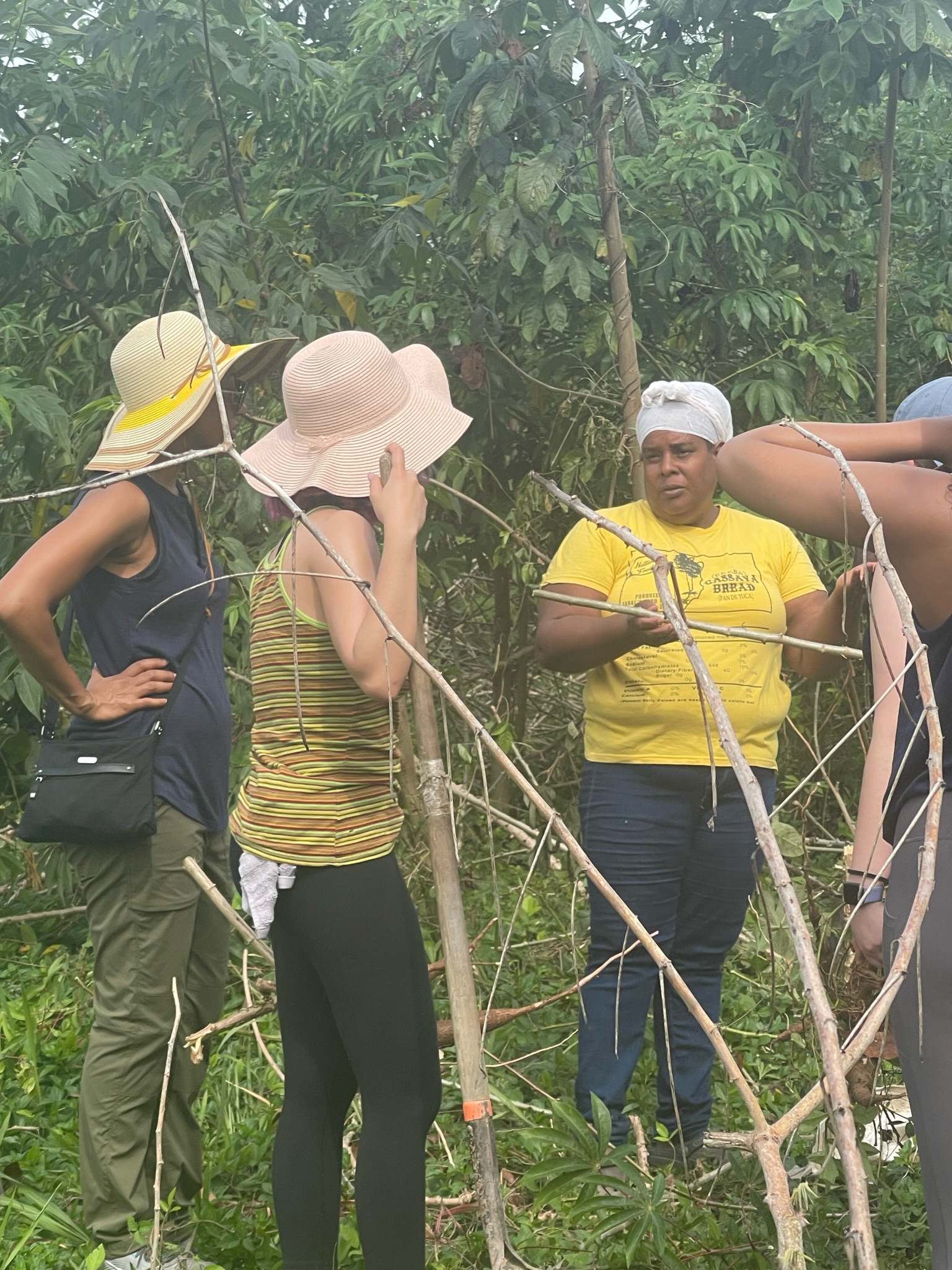
Our first task before making this dish was to collect the actual cassava/yuca roots. We ventured off into a farm area where lots of overgrown plants covered the area where the cassava was located. Some of us would first use machetes to clear the weeds and overgrown vegetation while others would pull back that vegetation. Once there was a root located, we would continue to pull back the weeds and plants to allow the individuals with the shovels to carve their way around the root. Once the root has a pathway carved, we would then pull it out of the ground to use for the next step.
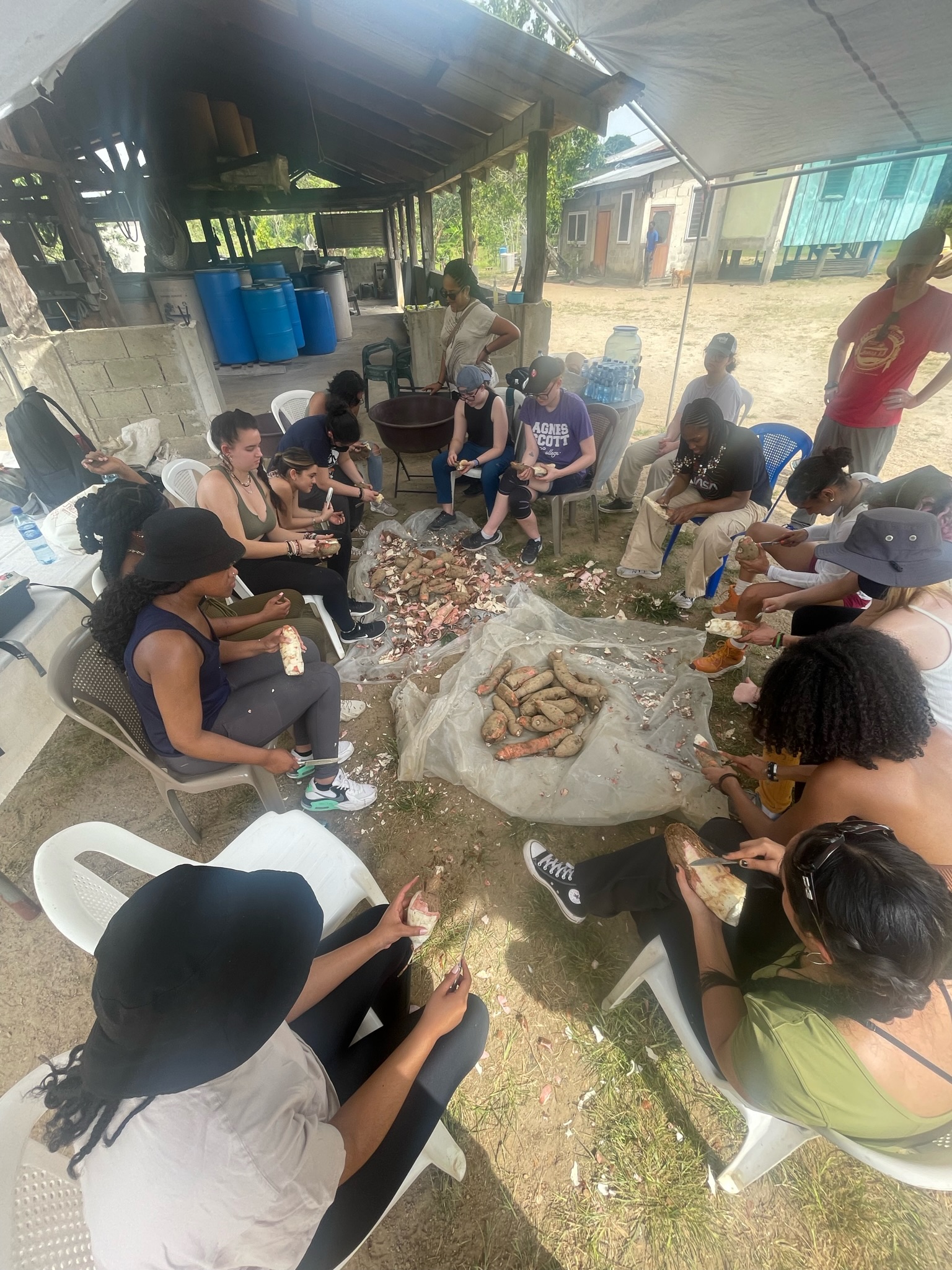
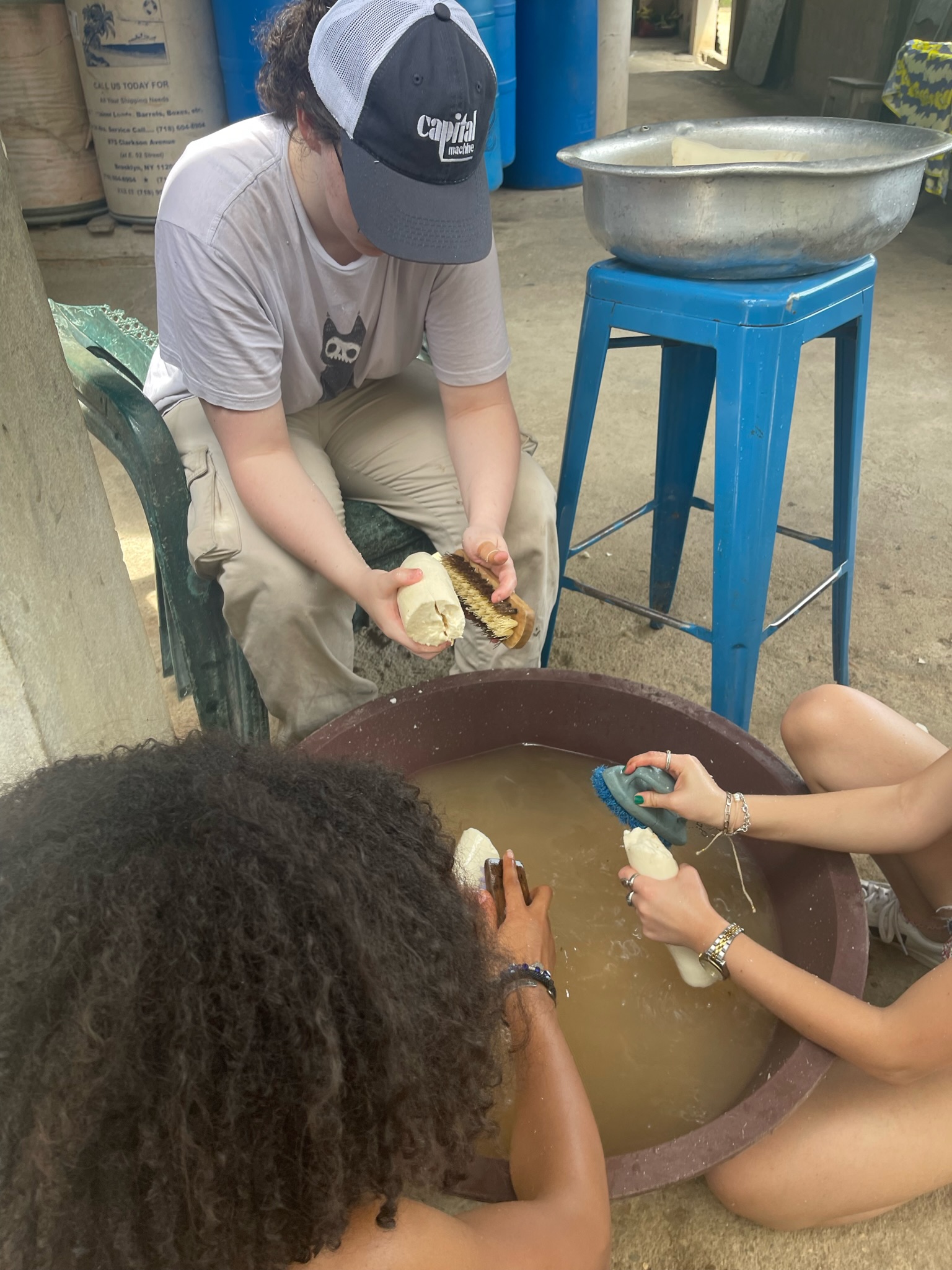
After we had collected enough roots, we then had to shave them with knives to allow them to be cleaned properly. I mainly started washing the roots because I had previously cut my thumb on accident when shaving them. The scrubbing was an arm-intensive activity as you had to scrape away any dirt and grime stuck to the roots. There were two types of roots used, bitter and sweet, both were used when preparing the Hudut dish.
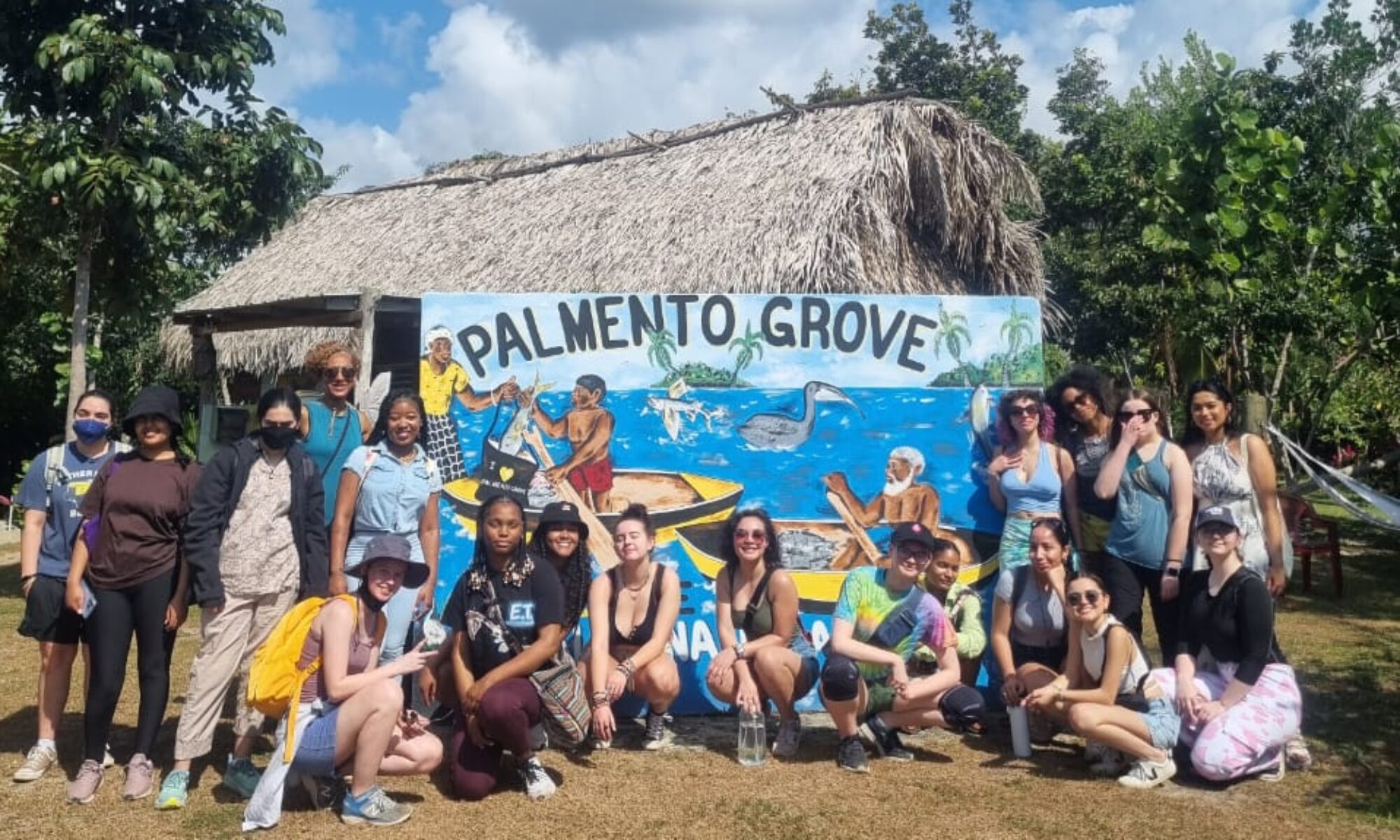
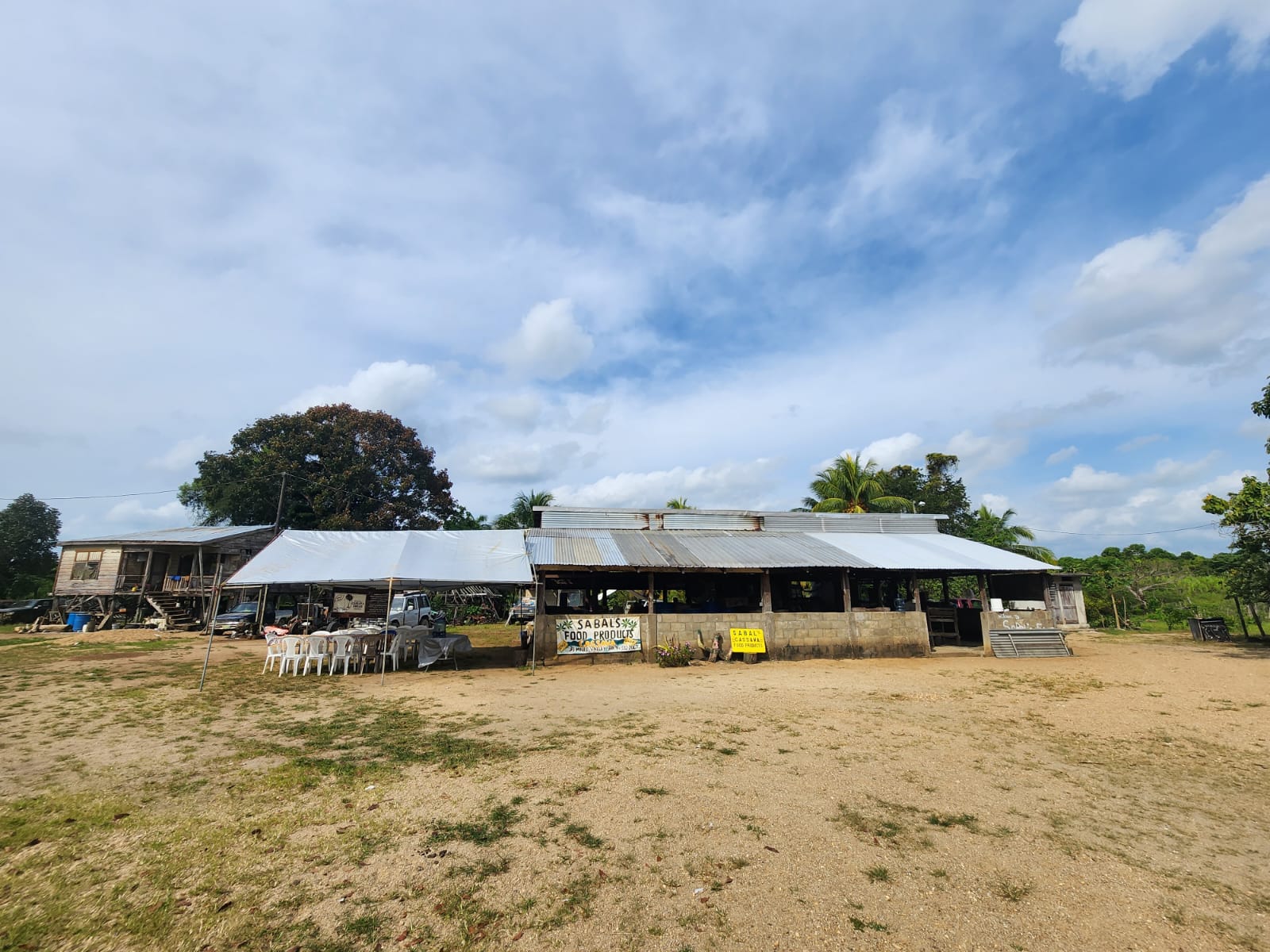
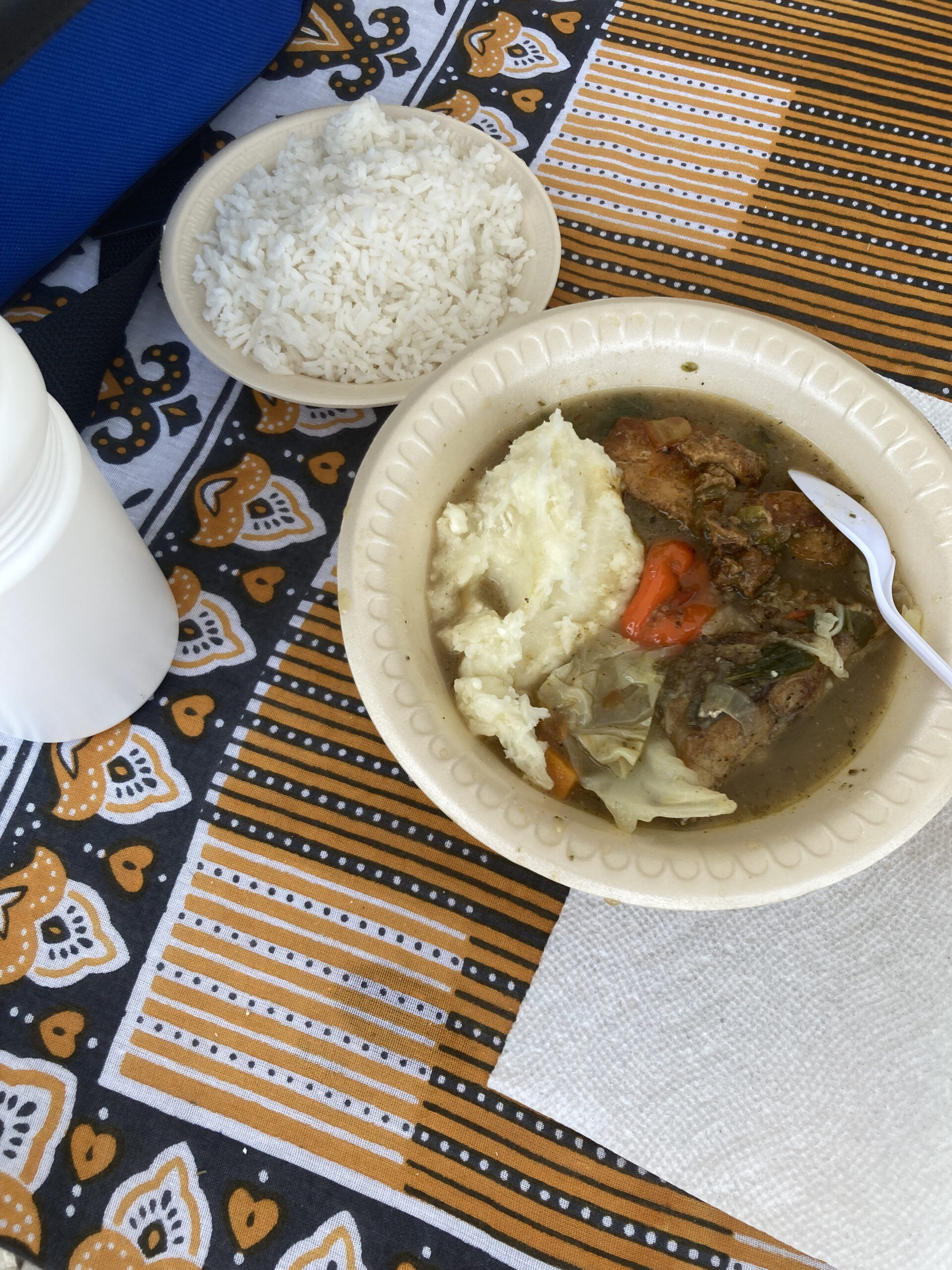
This Hudut dish was different in the fact that everything was added to the stew instead of eaten separately. The Hudut was not made from plantains, instead, it was made from cassava instead. There were also other vegetables added to this broth along with beef and fish. To me, it was interesting to see how globalization could affect the making of a single dish within the same community. The people from Palmento Grove and the people from Sabal’s Farm are Garifuna and live within the same region of Belize, Hopkins. Globalization played a hand in the different aspects of creating a dish like Hudut from both of these families.
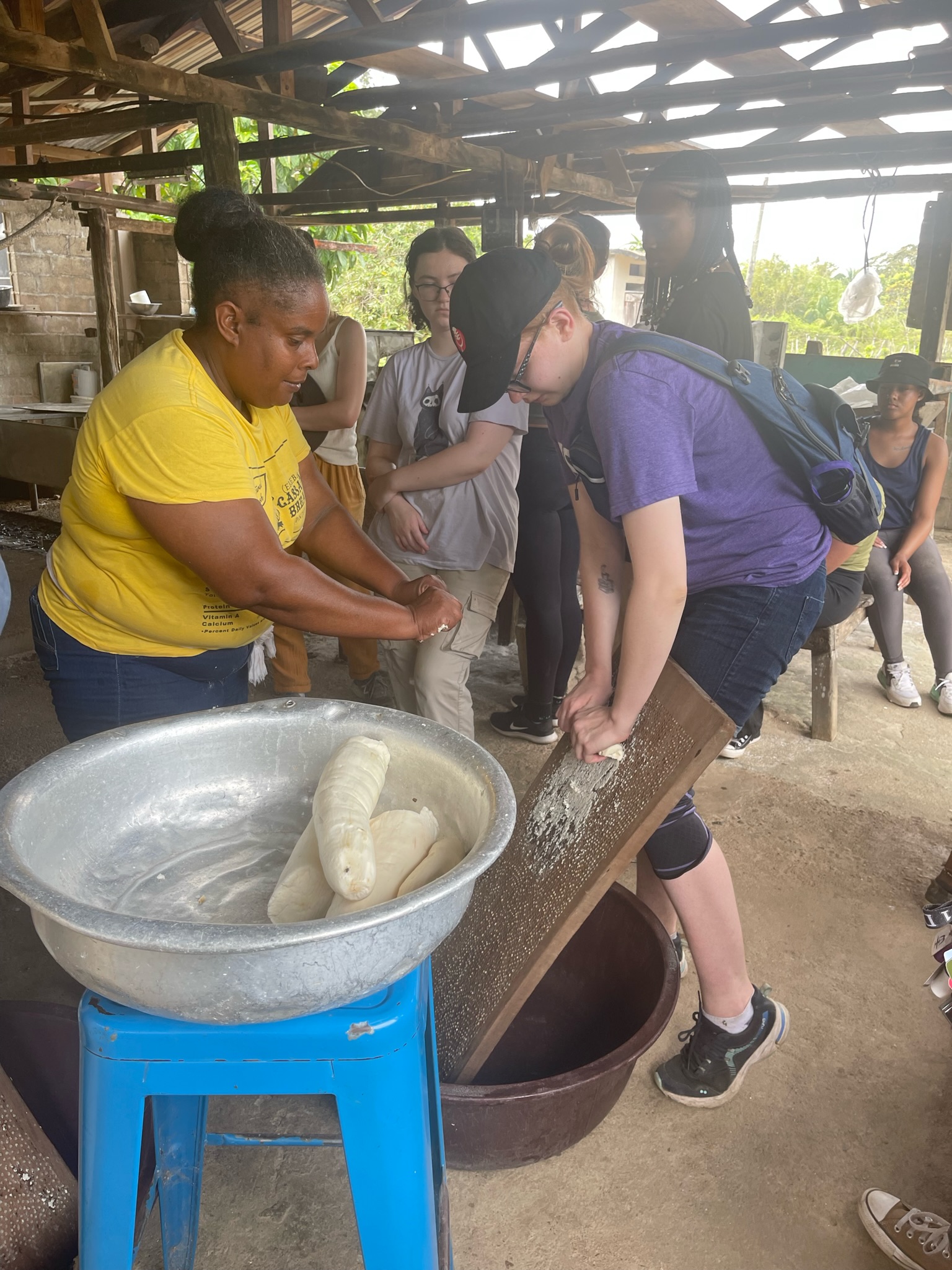
One major factor of the Sabal family’s identity is the machinery used when processing the cassava. Before the machinery was created by their grandfather, they had to grate and sift the cassava by hand. The items they used to grate the roots were a long washboard-like grater with small holes and a giant tub for the cassava to fall into. You had to use both hands and a forceful downward motion to scrape the root on the grater. The other process is sifting the hardened cassava grates into a fine powder. There was this giant, circular meshed mat where multiple people used their hands to rub the grated cassava into the mat. This created a fine powder which could then be used to make bread or flour.
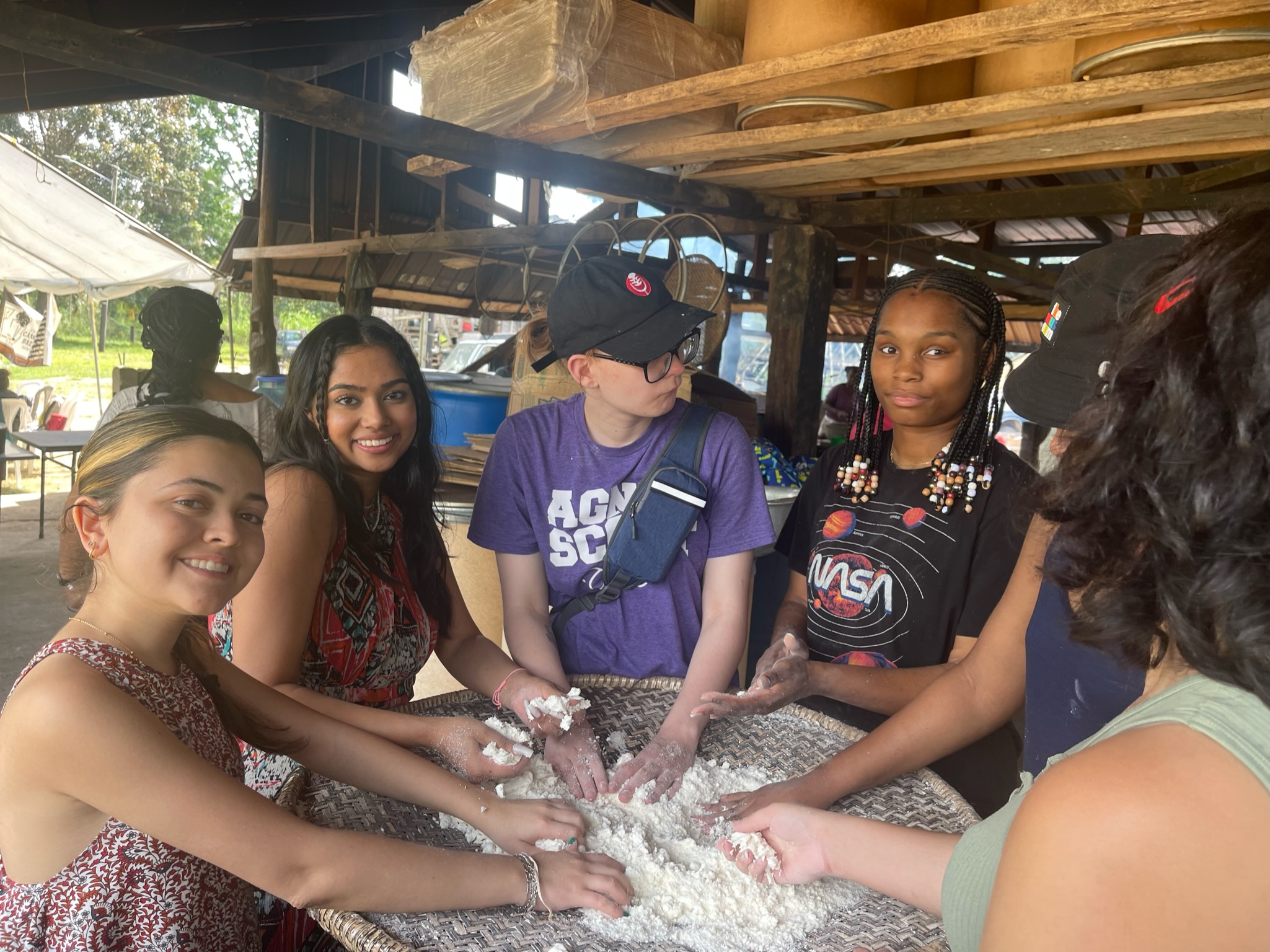
This process obviously took a good while to do especially under long hot days. This is why their grandfather created two machines used to help the process be faster and easier. They were both made of wood when they were first created but as time went on they had some improvements. The grinder is almost entirely made of metal sheets and while the sifter is majorly made of wood, it is still exceedingly functional. They kept it this way to honor their grandfather and to keep his memory alive. His machinery made exceptional progress in their farm’s cassava products and is an essential part of their identity and culture.
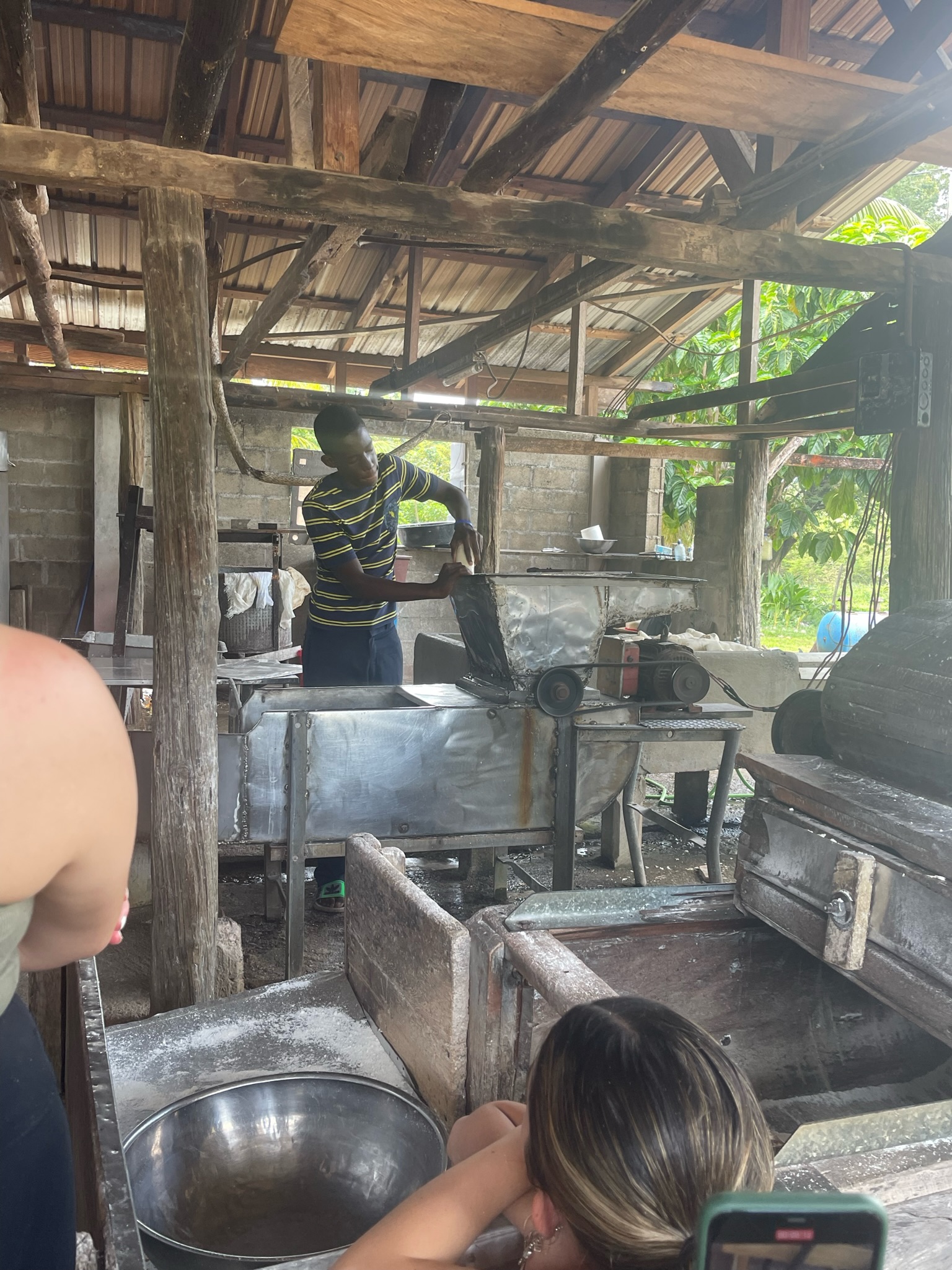
The topic of family seems to be one of the major things that contribute to Garifuna’s identity. A lot of techniques for making cassava are passed down throughout generations. Sabal’s Farm is family run so it is incredibly important that the newer generations know how to make Cassava and run the business.
One of the last things we saw during our experience at Sabal’s Farm was to see our guide’s mother making cassava bread.
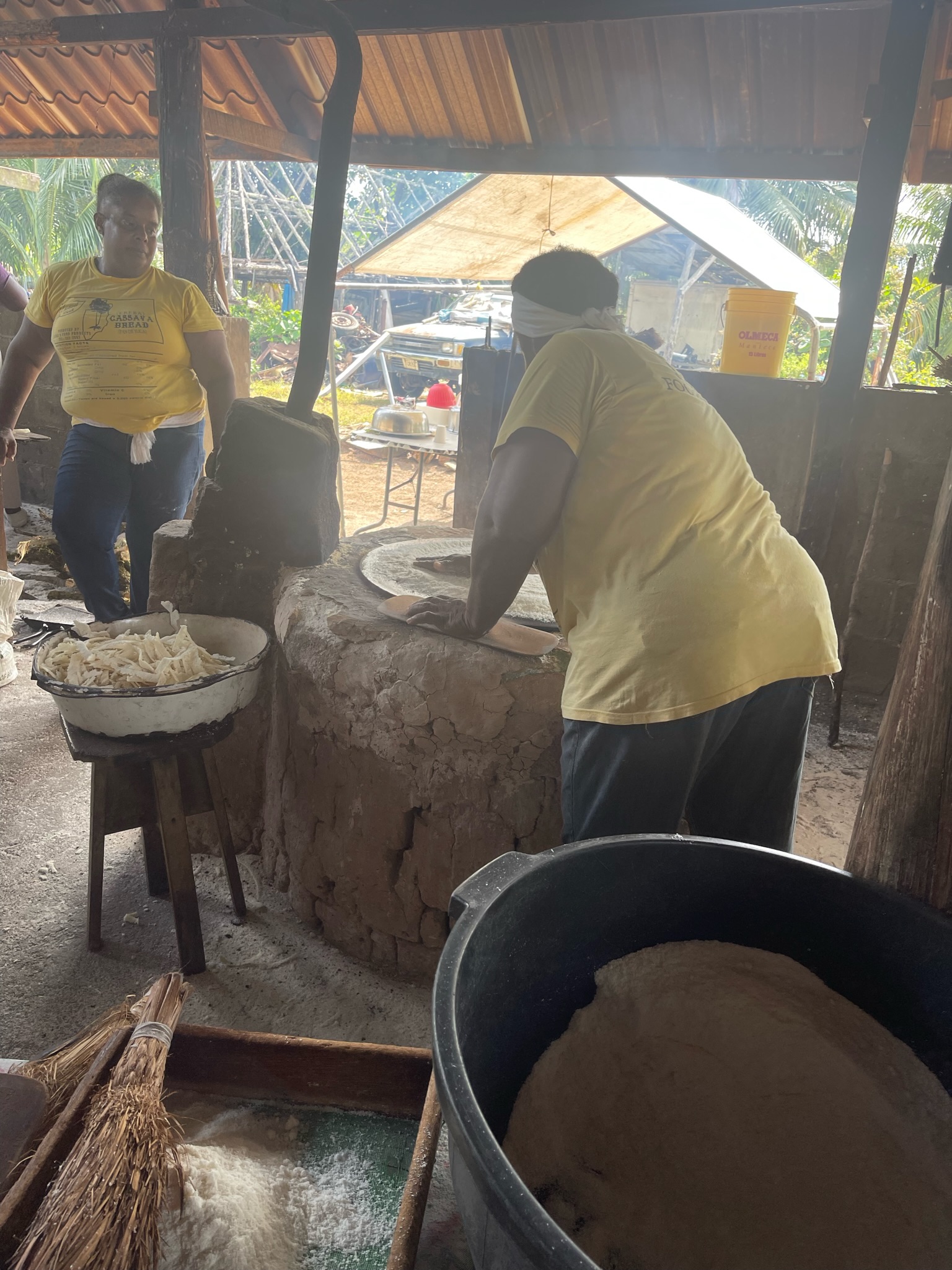
The bread-making process was not an easy task yet it seemed to be second nature to our guide’s mother. Her process was spreading fine-grained cassava, carving the edges, pressing the bread and the grain to the stove, and flipping the bread for an even cook. She has a lot of experience and knowledge in cooking cassava bread. That experience and knowledge will someday be passed down so the newer generations will learn the cassava-making process. This passing down of knowledge contributes to their identity as cassava-making is a big part of their culture. Newer generations knowing how to make cassava bread also contributes to the globalization of Sabal’s products. When more people know about Sabal’s farm, more people will want to go there and get cassava-based products. It also provides an opportunity for people to learn about this side of the Garifuna culture.
