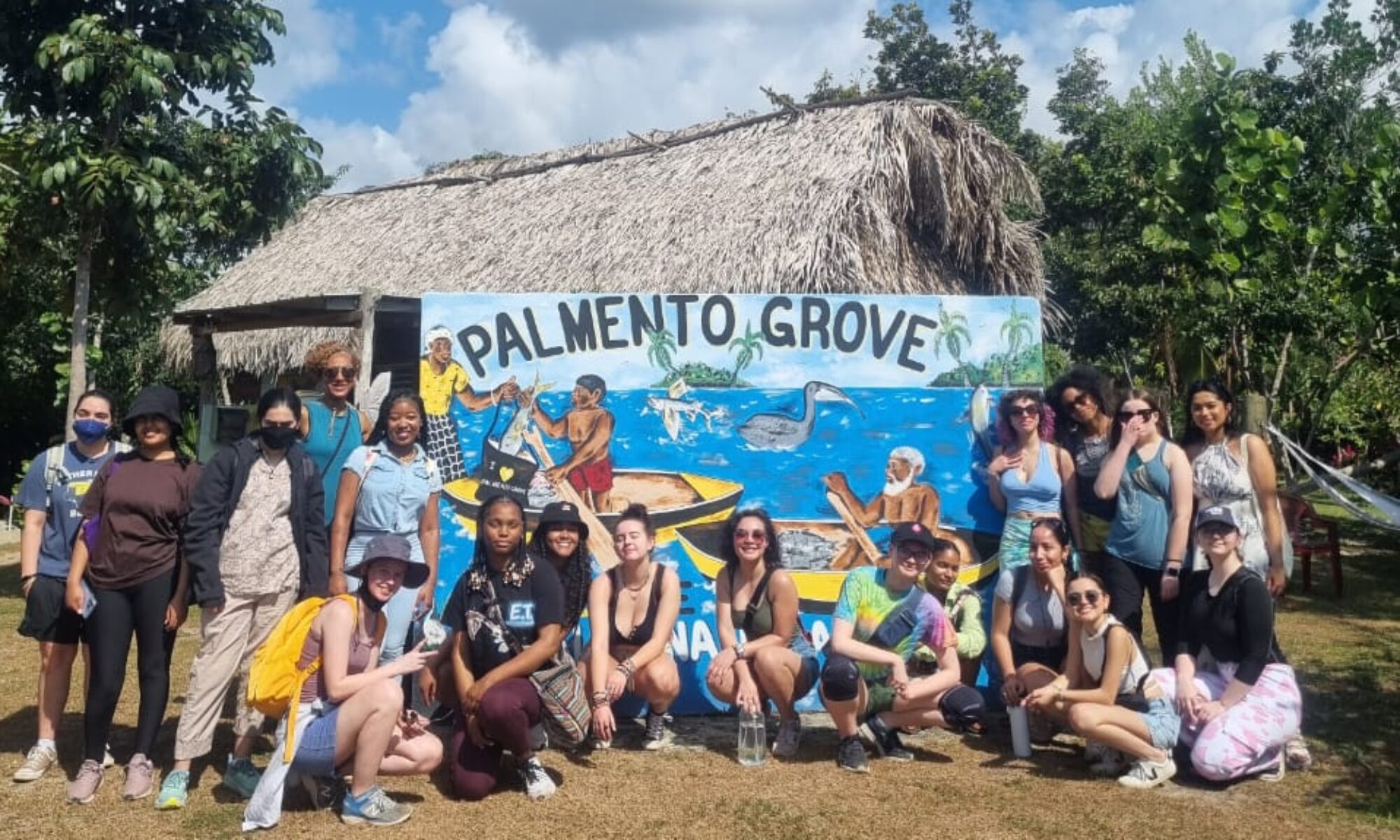
Agnes Scott College provides their first-year students the opportunity to go on an immersion experience during a week called, Peak Week. This experience, Global Journeys, can be outside or within the United States. My journey experience was to Belize in Central America. The purpose of this trip was to allow students to experience global issues and course concepts in a hands-on method of learning. The main concepts presented within my Global Journey class were colonialism, ethics of travel, globalization, and identity. I want to focus primarily on identity and globalization as I write about the cultural foods I ate throughout my experience in Belize.
The way I prepared for this journey was by doing a lot of class readings on Belize. I looked at some cultural norms in Belize that were helpful when actually visiting. One tip I remember was with the issue of cat-calling, women are not to engage or that would influence the man to continue what they’re doing. Some of the readings we did to prepare were A Small Place by Jamaica Kincaid, The Last Flight of the Scarlet Macaw by Bruce Barcott, Time Among the Maya by Ronald Wright, and Souse, but No Black Pudding from Clarke and Lorde. I physically prepared by packing light clothing, a journal to take notes, and hygiene products under 3 oz.
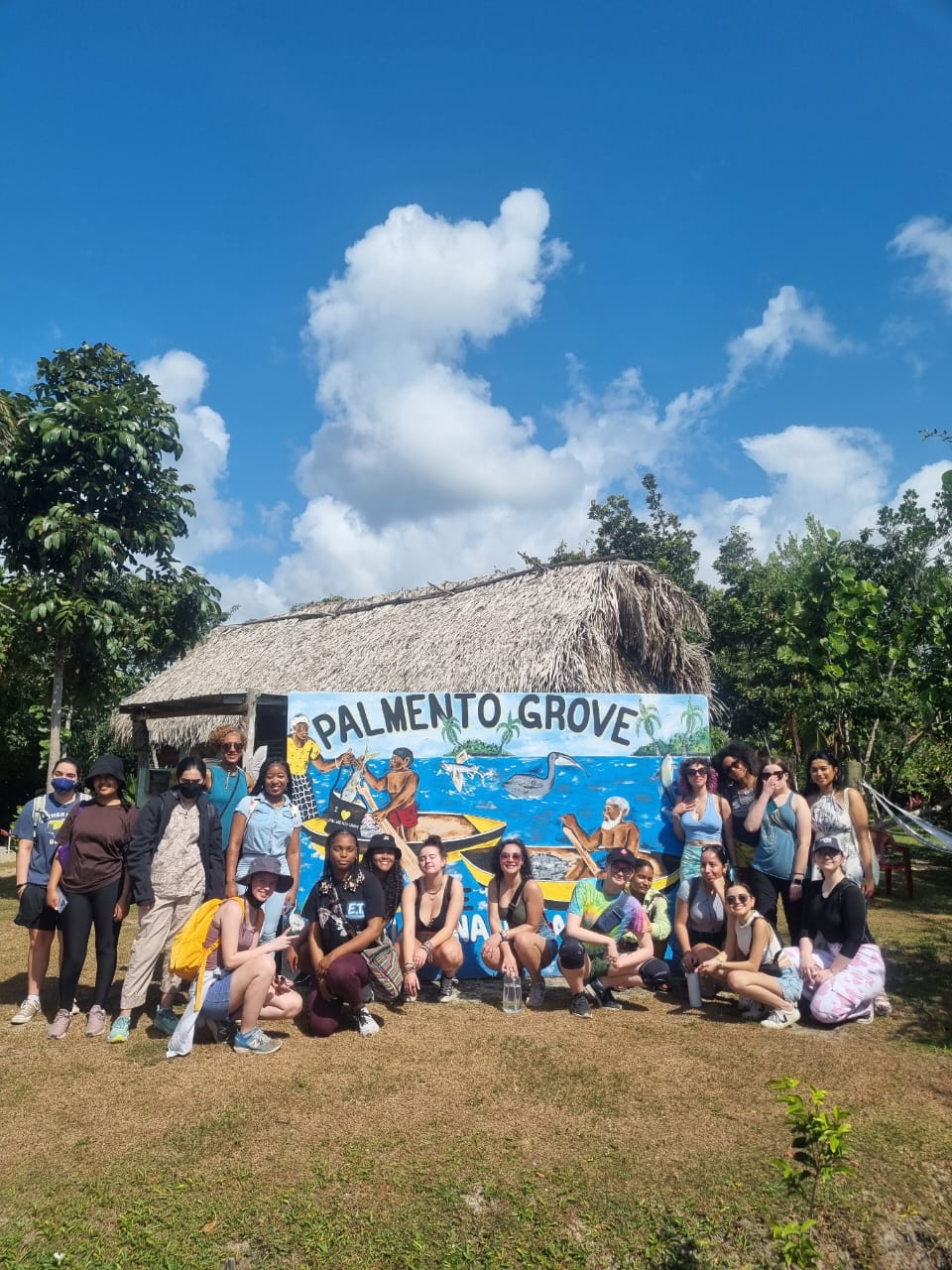
One of the first places I visited in Belize was the Garifuna community in Palmento Grove. The person giving us insight into what activities my group and I would be doing in Palmento Grove was Uwhanie. One of the activities we did was to make a dish called Hudut. Before we could begin making Hudut, Uwhanie showed us the different plants her community was growing along with the various benefits they could provide. My group also had to change into some traditional Garifuna garments considering we would be outside and the clothing would help us regulate the heat. Afterward, she brought us to her father who gave a quick history of the Garifuna and aspects that contributed to their culture. The Garifuna believe in harmony in the universe. Darkness cannot exist without light, life cannot exist without death, etc. Another aspect that contributed to Garfuna’s identity was how well a woman could tell the difference between the shades of a coconut. Uwhanie made a joke that if a woman wanted to impress a man and his family but couldn’t tell the difference between the coconuts, he would have asked what planet she even came from.
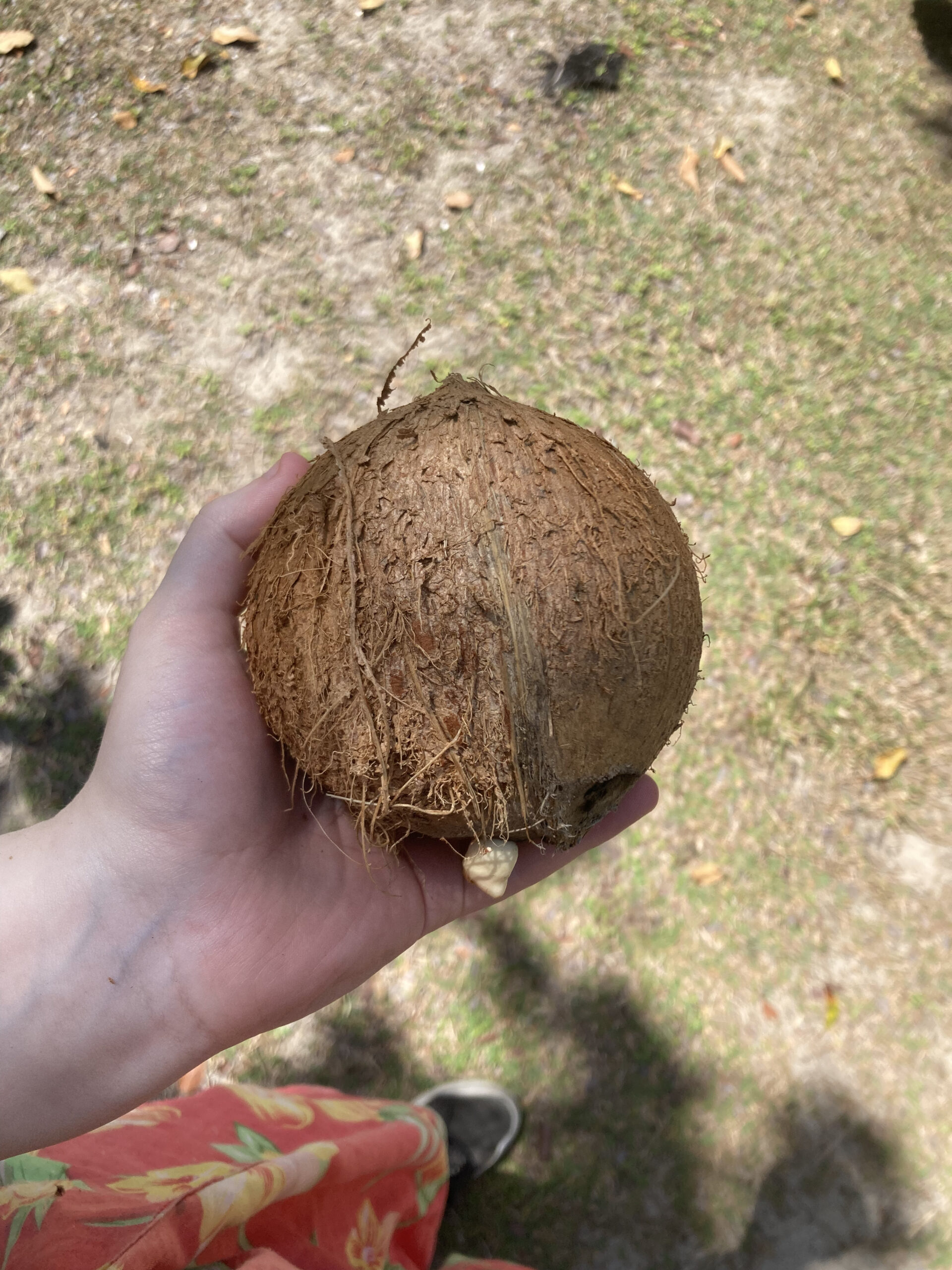
Our first task in the process of Hudut making was to husk the coconuts. There was a giant spike in the ground where Uwhanie demonstrated pushing the coconut onto the spike and ripping the shell off. She used the grooves of the coconut to better leverage and pull apart the husks. After the majority of people in the group were able to husk a coconut, we headed over to the kitchen where we next had to crack open the coconut. We each took turns with our coconuts and hit them with the back of a big knife to crack them open and get the coconut water from inside. After opening the coconut, we then had to use a shredder to clean out the actual meat from the coconut in preparation to make coconut milk. After all the coconut had been shredded, water was added to the dishes of coconut which we kneaded with our hands. We next had to strain the coconut milk to be used as a broth for the fish stew. There were other spices and herbs added to the stew for flavor as well. The fish used for the stew was barracuda. Once the barracuda was added to the coconut milk broth, the pot was then transferred to a stovetop which was stirred continuously.
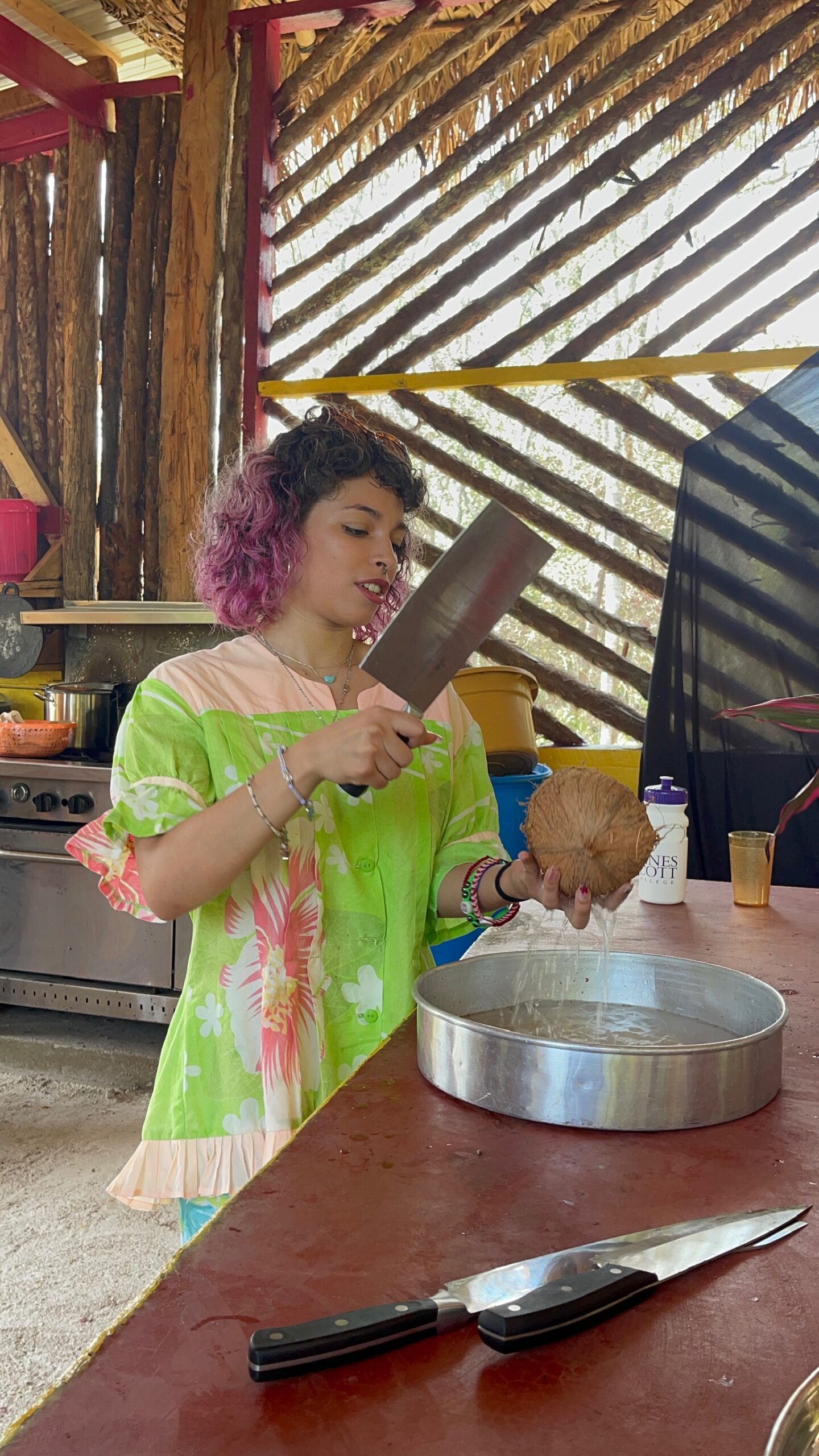
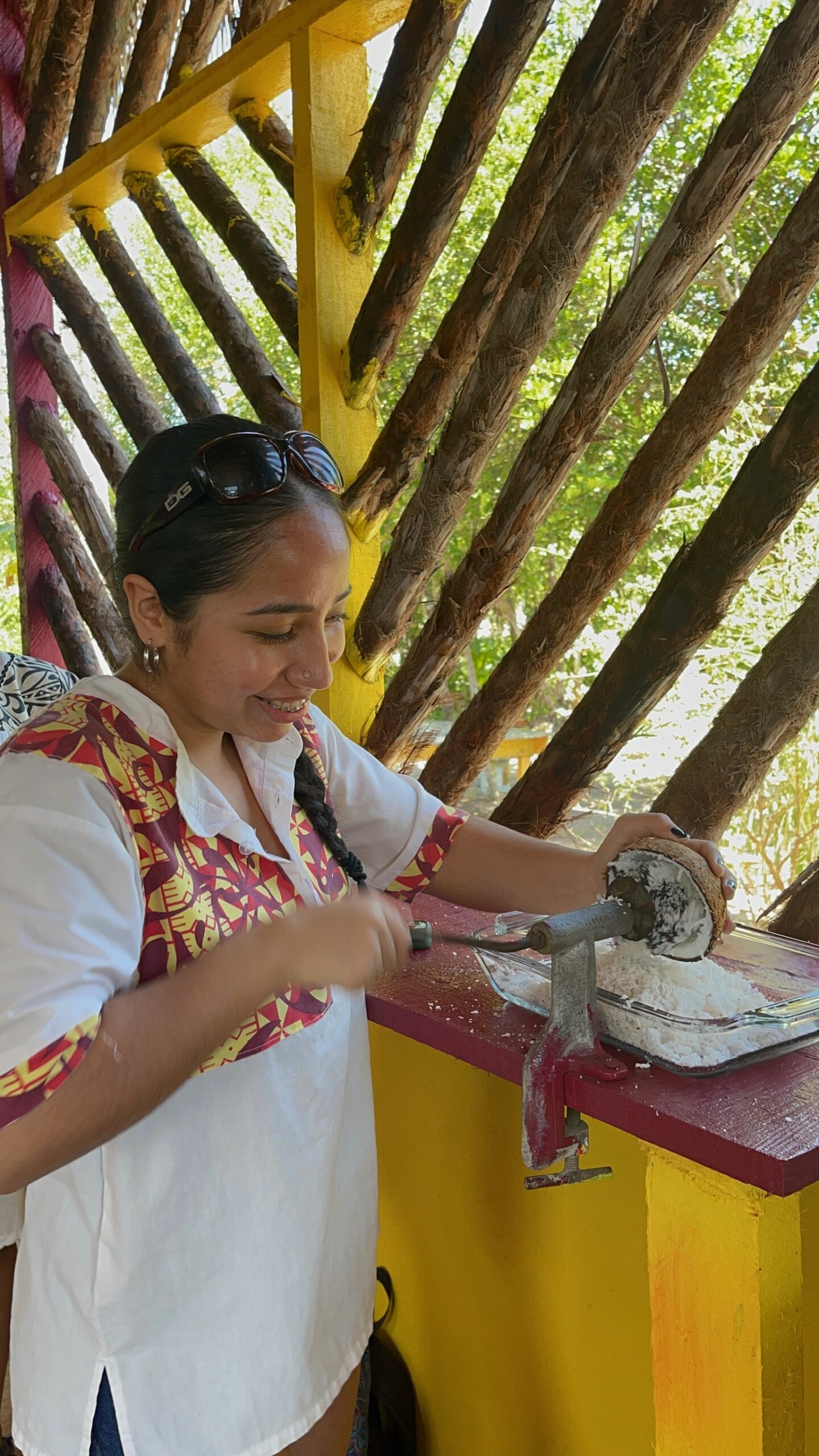
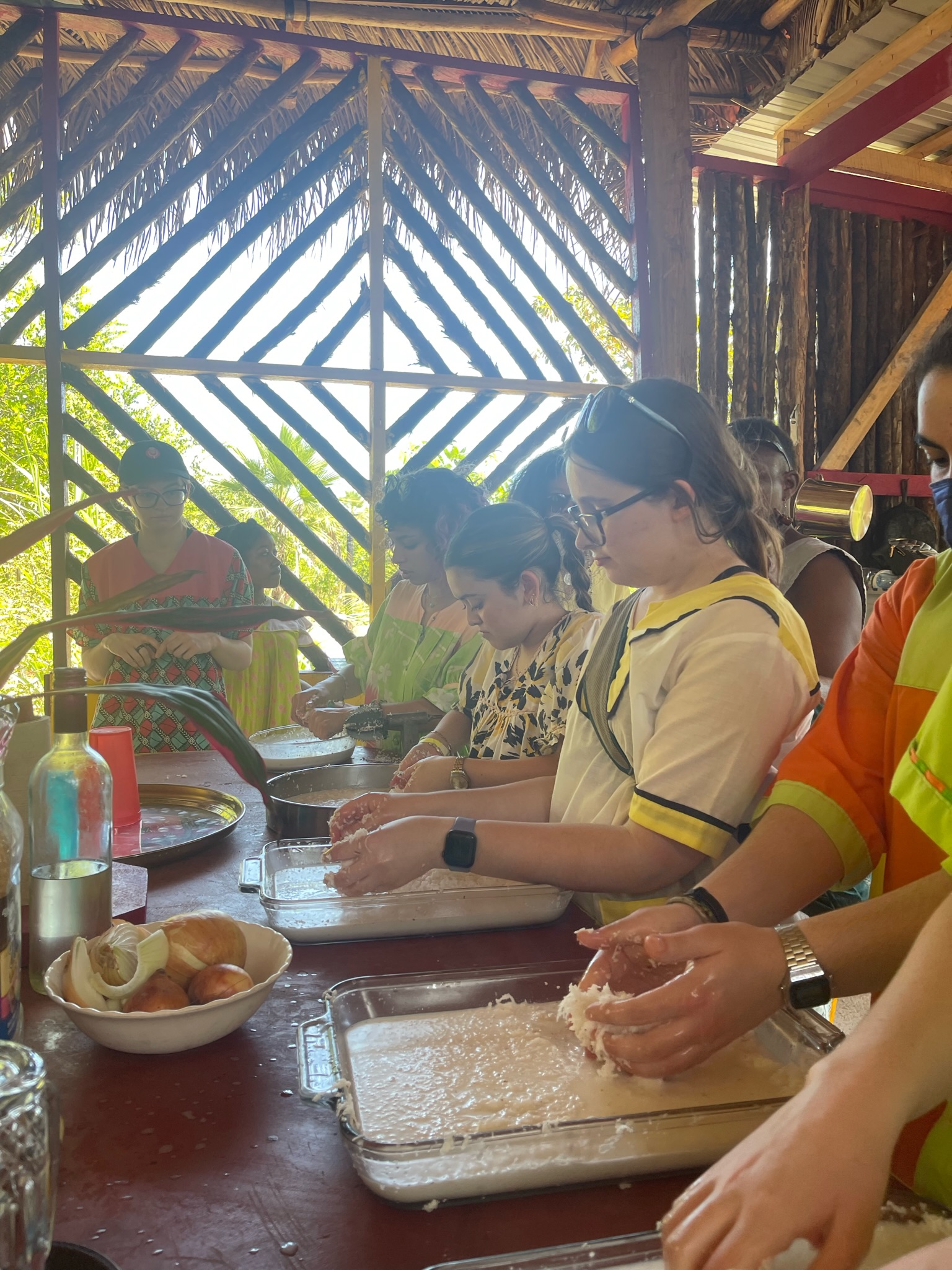
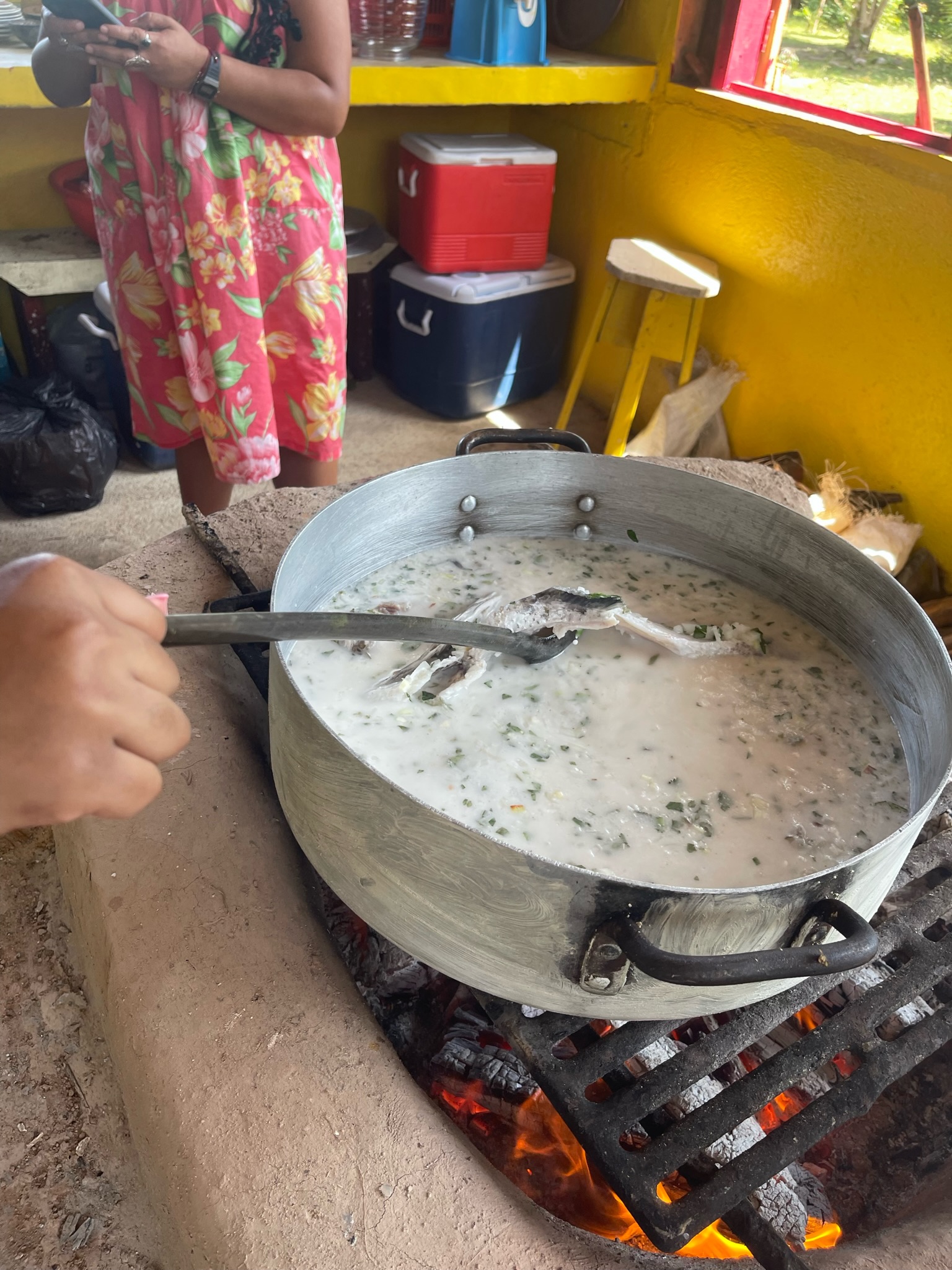
The main reason this dish was called Hudut is due to the mashing process. While the stew was being stirred, Uwhannie’s father took out a large mortar and pestle and mashed together both green and yellow plantains. The plantains were mashed until they turned into a sort of paste. Our group each took turns to mash the plantains with a pound and twist motion of the pestle as it hit the plantains in the mortar.
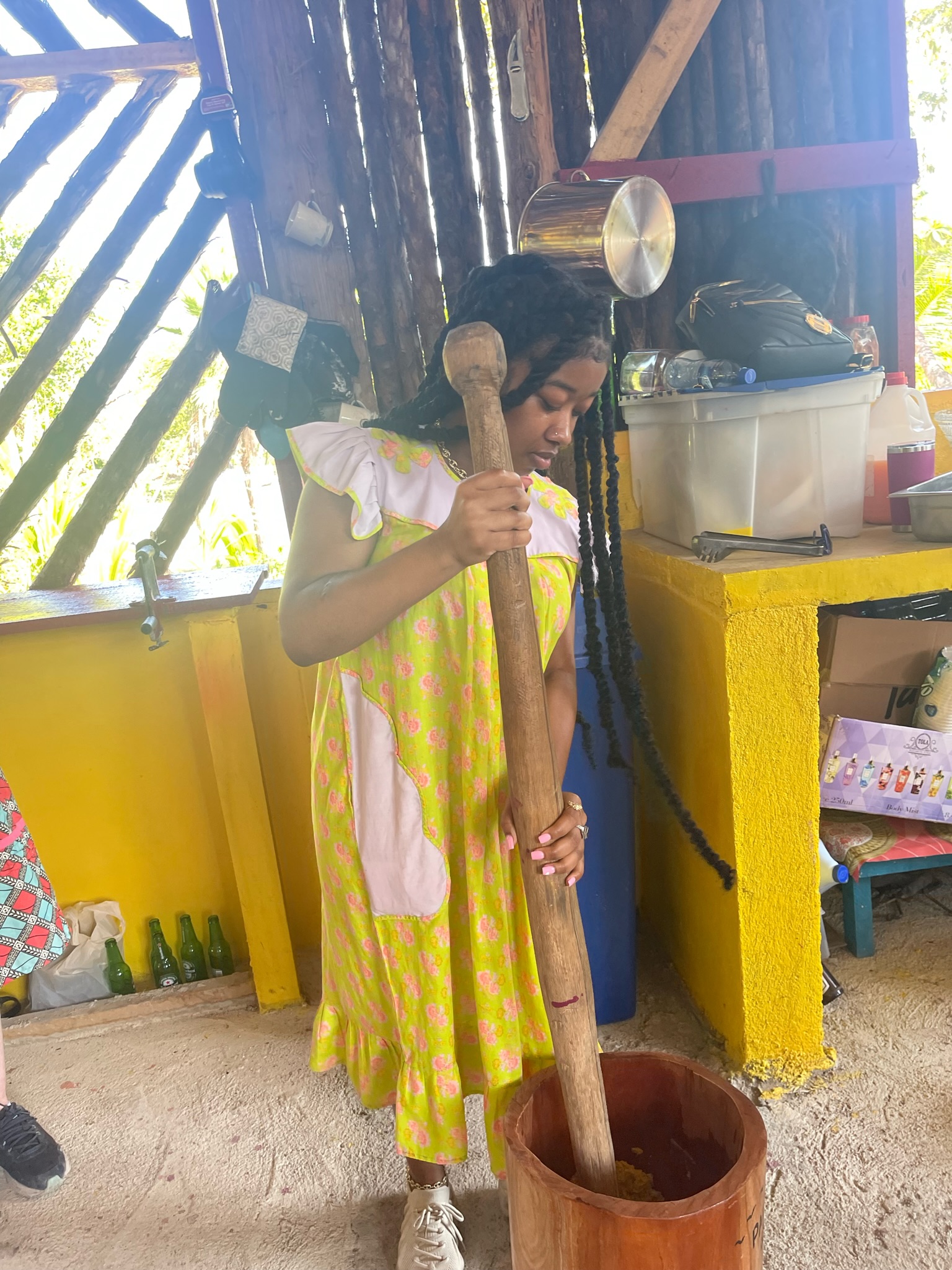
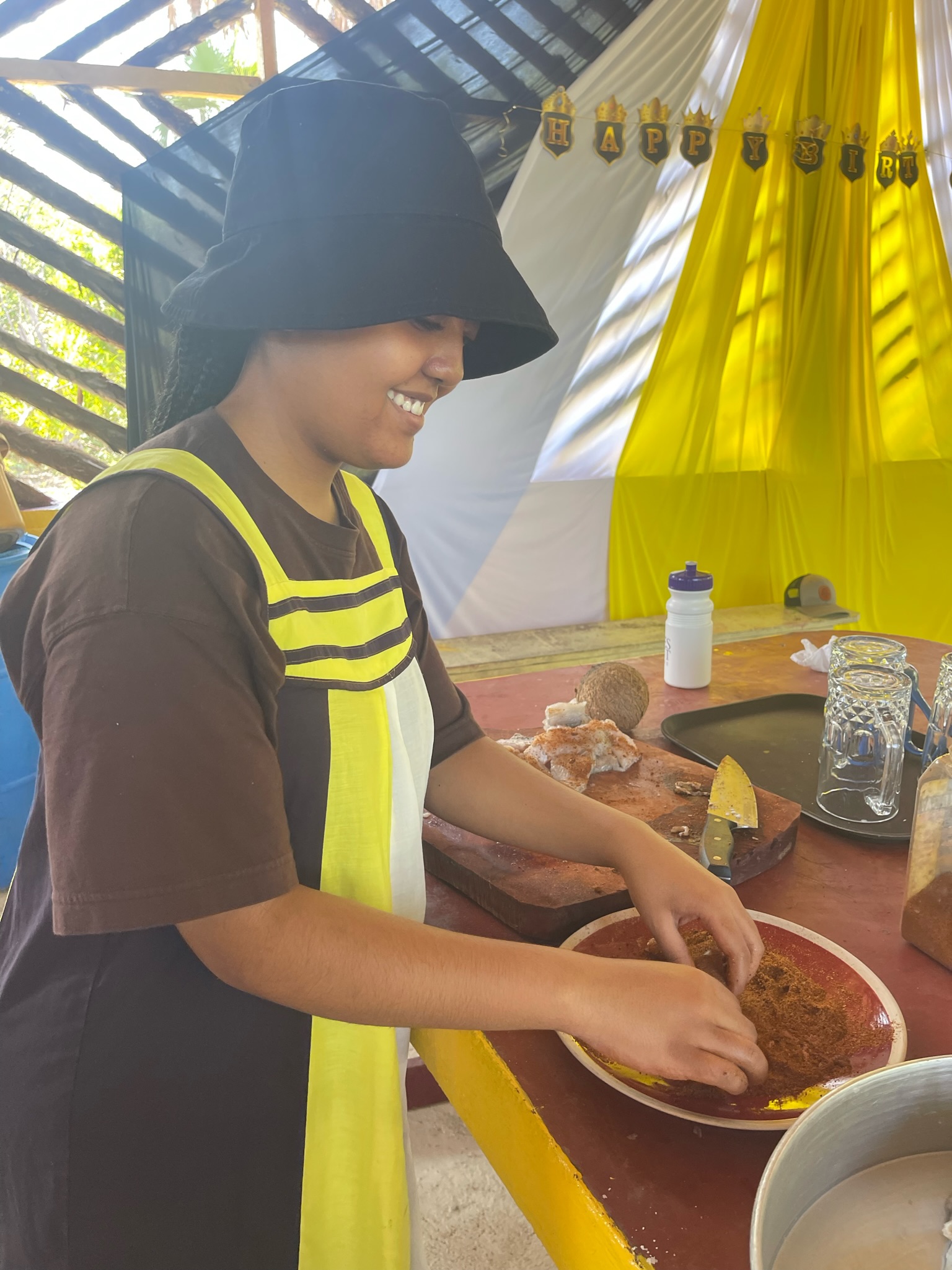
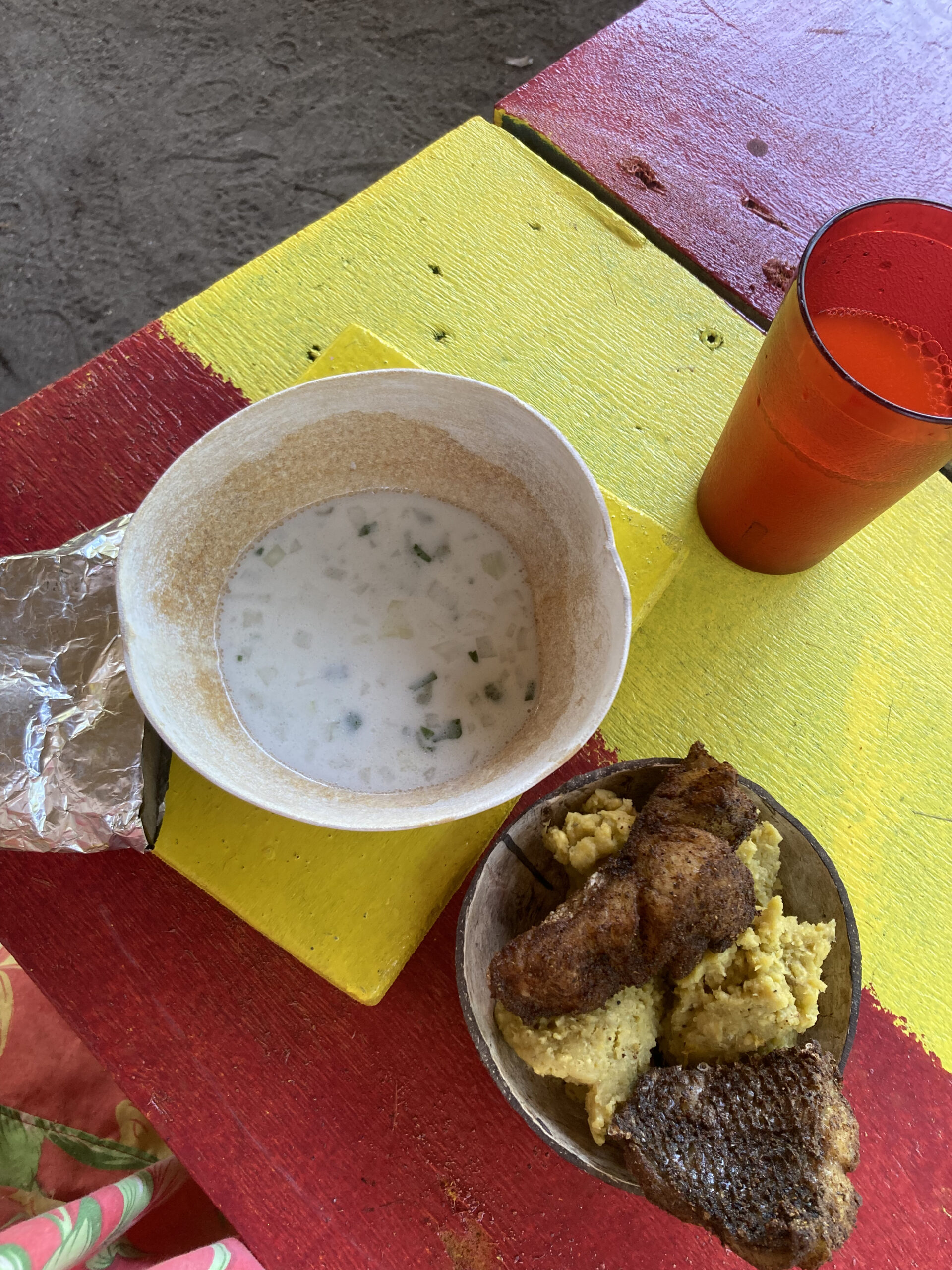
The last thing made for this dish was the sides. There were slices of barracuda rubbed in spices and some plantain tamales with a tomato and pork paste to go on top. These two really put the dish together as it added more to eat with the Hudut. This dish had a lot of hard work put into making and it correlated heavily with identity and globalization. When Uwhannie and her father mentioned this dish being used for weddings and celebrations, I thought a lot about how food is an essential part of the Garifuna community and their culture. Globalization can be seen when Hudut was made differently in other parts of Belize.
I could find similarities and differences within my own identity when we had our Hudut cooking class. A similarity I saw was when everyone put in the work to make this dish. Within my own family, everyone in the house would help my mom make the food she was cooking. If we wanted to have food on the table, we were expected to help out within the kitchen which led to a lot of bonding and overall good memories. A difference I saw within the Garifuna community and my identity was that they were more in tune with their culture and heritage. I had never learned about my own culture and heritage so it was an eye-opening experience to see how connected the Garifuna community was. I enjoyed my time at Palmento Grove and it was a very culturally opening experience. My next post will talk about Sabal’s farm and how they made Hudut using cassava.
